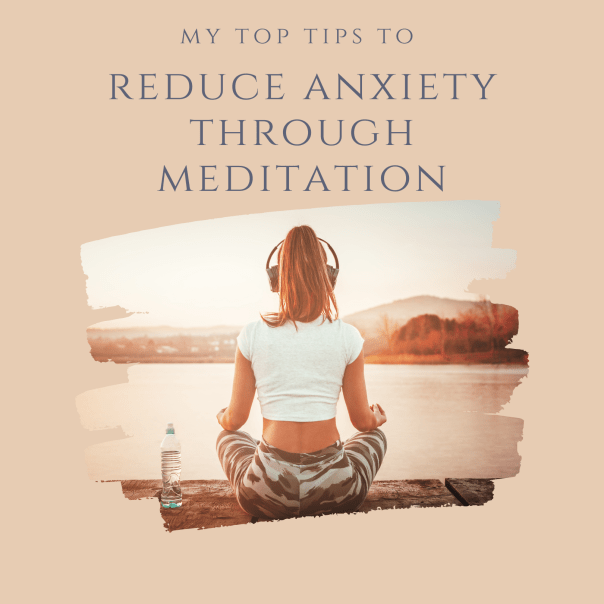
How to End Anxiety Through Meditation


When it comes to using meditation to manage anxiety, multiple studies have reached the same conclusion. Mindfulness can help you to stop worrying. Almost 7 million Americans experience Generalized Anxiety Disorder, and many more have occasional bouts of fretfulness due to pressures at work or home. While you can’t remove the stress from daily life, there are steps you can take to feel more at ease. Try these natural remedies.

Anxiety-Related Benefits of Meditation

Researchers have been studying how meditation affects a wide variety of health issues. The American Medical Association, reported that meditation appears to be most effective in addressing anxiety, depression, and pain management.

  1. Focus on now. Most anxiety tends to be centered on rehashing the past or anticipating the future. Meditation encourages you to engage fully with the present moment. Your attention switches from useless regrets and fears, to constructive endeavors.
  2. Connect with your body. Chronic anxiety takes a toll on your physical health through inflammation and other symptoms. Scanning your body reminds you to lower your shoulders and unfurrow your brow.
  3. Change your brain. Meditation alters your brain so your contentment will grow. Stress hormones decrease and serotonin levels rise. Gray matter enlarges, while the amygdala, which processes fear, shrinks.

How to Meditate to Reduce Anxiety

Meditation can be adapted to suit your individual needs. Take classes or sit at home for free on you own schedule.

  1. Start off gradually. The benefits of meditation can often be seen within a week or two, and even 10 minutes a day pays off. Set aside a brief time each day for contemplation.
  2. Clarify your purpose. You may want to use meditation as part of your spiritual practice or take a completely secular approach. Meditation is not necessarily religious. You can develop greater peace of mind with your own set of beliefs.
  3. Separate facts from feelings. Introspection helps you to distinguish between actual events and your inner thoughts and emotions. As you train yourself to think objectively, you can achieve greater control over your reactions.
  4. Develop insights. Examining your mind also helps you to understand yourself and others. You may discover the root causes of your anxieties and how best to deal with them. Maybe you’ll want to replace negative expectations with a sense of curiosity. Perhaps you’ll pay more attention to the kindness you receive from others instead of conflicts.
  5. See your doctor. While meditation is powerful, your physician may recommend treatments including cognitive therapy and medication if your anxiety persists. You can still practice meditation and other self-care to aid your recovery. Let your doctor know what you’re doing on your own.

Other Natural Anxiety Aids

Meditation is even more productive when you combine it with other healthy lifestyle choices. Take a look at your daily habits.

  1. Eat whole foods. A diet full of processed foods and sugar aggravates anxiety and depression. Get most of your calories from vegetables, fruits, whole grains, healthy fats, and lean proteins.
  2. Limit alcohol and caffeine. Too much coffee may give you the jitters, and self-medicating with alcohol usually backfires. See if cutting back makes a difference.
  3. Exercise more. Physical activity melts away anxiety and stress. That’s especially true for vigorous aerobic workouts like running or rowing. When I am at the gym, I have to force myself to leave. I find working out very addicting.
  4. Rest and relax. Fight anxiety with a good night’s sleep and occasional breaks during the day. Go to bed on a consistent schedule.

If anxiety is interfering with your life, help is available. Achieve greater peace of mind through meditation, and see your doctor if you need additional support. You tube has a lot of free meditation guides and resources.

To Your Success,
Juan
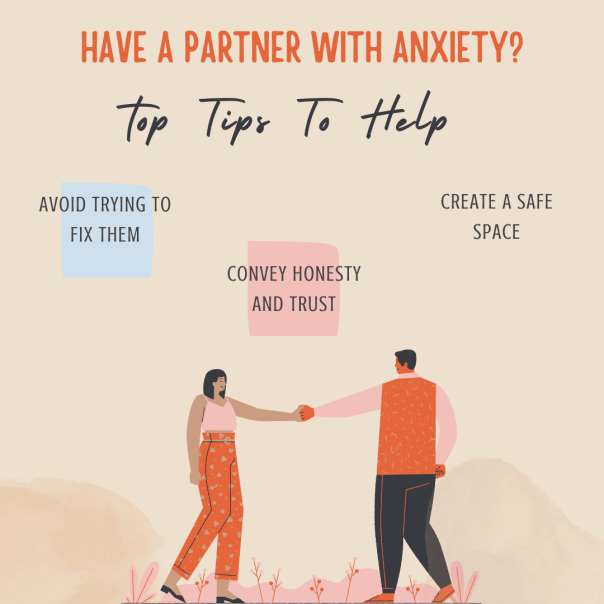
7 Tips To Help Support Your Partner With Anxiety


If you are married to, or have fallen in love with someone who suffers with anxiety, you may know how difficult life can be for them. Luckily, there are things that you can do to help to support them, making life more joyous for you both. Let’s dive right in.

Consider these ideas:

  1. Avoid trying to fix them. Acknowledge that you are their wife, husband, boyfriend, girlfriend, partner, or lover, and not their Therapist. While you can be there to help support them through any tough times, it’s important to avoid pressuring them into behaving how you believe they should behave.
    • When you put such additional pressure on them – even if you think that following your advice would help them – you may cause them to feel as though they have failed you, which will only exacerbate any anxiety they are feeling.
  1. Avoid telling them why they shouldn’t be afraid of something, no matter how tempting. Even if you think your partner fears are irrational, telling them what you think most likely will not help.
    • Instead, you can initiate a discussion around why this particular issue is upsetting. Sometimes talking can help reduce any fear being suffered.
  1. Be honest with your partner. Avoid treating them as a child who cannot cope with any sort of bad news. This can cause a challenging dynamic in your relationship.
    • Instead, be honest. For example, if you are going to be late getting home, let them know so they won’t imagine you dead in a ditch. If you have a large bill to pay, keep them in the loop instead of trying to hide it.
    • Hiding the truth can lead your partner to picturing the worst possible scenario.
  1. Understand that their idea of happiness may be different than you own. Some people may find happiness in partying or dancing, while others enjoy traveling and showing off those Instagram pictures.
    • Someone with anxiety may find happiness in a day passing without suffering from a panic attack. These small victories can mean a lot.
  1. Make them feel safe. This is one of the most important tips. Someone who suffers from anxiety may feel unlovable. Reassure them that you are both on this journey together.
  1. Remember that you are allowed to live your life. Just because your partner has anxiety does not mean that you can’t have a life of your own. You are still allowed out to meet your friends, go to a party, have hobbies, or do something else just for you.
    • When you leave the house without your partner, reassure them you are going to be okay, you will be thinking of them, and you will soon be back home safe and sound.
    • Whether your partner has anxiety or not, practicing self-care is important! Self-care helps to keep you physically and mentally fit and can prevent feelings of resentment against your partner.
    • Remind yourself that you and your partner are more than just anxiety. Anxiety does not define either one of you.
  1. Ask their opinion. Your partner may already know some things that you can do to help them relieve anxious feelings. Listen to them! No one knows them better than they do, and what they have to say is important.

Putting these ideas into practice can help relieve anxious feelings and strengthen your relationship with your partner. A counselor, therapist, or support group can also help immensely with additional strategies and techniques, to alleviate anxiety and strengthen your bond as you go through this journey together.

What do you think of these tips? Which one will you implement?

To Your Success,
Juan

Anxiety and Fear are Cousins


Welcome Back,

Pleased to have you. Thanks for stopping by!

Do you feel anxious before a medical/dental visit, or starting something new? Full disclosure; I get very anxious years in the Dentist office. I crumble into a million little pieces. I am constantly amazed at how quickly it happens! I start sweating profusely. My bladder starts filling up again, doesn’t matter if I went minutes ago. My body is wound so tightly, I have to force myself to relax. Recently, the Dentist finally suggested I take Valium. My PCP agreed.

Have you gotten the jitters before speaking in front of a large group, or sweaty palms when thinking about the future? These are common reactions, when faced with something that’s scary or unfamiliar, and it doesn’t necessarily mean anything is wrong. However, some people suffer from a more severe form of anxiety, that causes more serious physical symptoms. To better understand if your anxious feelings could be a sign of an anxiety, or panic disorder, let’s do a deep dive:

1. If your heart is racing, and you can’t breathe correctly, this can be a symptom of anxiety that is severe, enough to get professional help.


2. Some people have uncontrollable fears of things like crowded places, driving, or germs that cause complete avoidance of places or situations.


3. The consistent inability to concentrate can be a symptom of anxiety. This must be consistent behavior, not just on those occasions when you lack sleep, brought on by hunger, for instance.


4. Nervous behaviors, such as walking around the same area, over and over again, or twitching your fingers or toes repetitively, can be another indicator.


5. A feeling of doom that something will happen to you, such as an accident, heart attack, or even death, can be symptoms of an anxiety disorder or panic disorder.


6. Numbness in your hands, fingers, toes, and legs or feeling like you can’t stand are  common.


7. If you have trouble swallowing, or unusual dry mouth episodes, these may be indications of anxiety.


8. Fear of people around you, and the desire to be alone, are feelings many anxiety sufferers face.


9. The inability to leave your home, can be a symptom of a severe anxiety or panic disorder.


10. If your normal activities become overwhelming, you could be suffering from anxiety or a panic disorder. More than fifteen years ago, I worked the front desk of an animal clinic. I didn’t know it at the time, but I had a panic attack, later confirmed by EMS personnel. One of the worse experiences of my life. My Doctor surmised, it was related to working and attending school full-time. 

Certain cultures rarely openly acknowledge mental health issues. More than ever, I hope to reach this demographic. Being born and raised in the Caribbean, I can attest to this.  The good news, is that these symptoms and conditions, are no longer considered taboo in mainstream society. The COVID pandemic, has shed a huge light on the burgeoning mental health crisis.

If you suffer from anxiety, please do not do so in silence. Many mental health clinics, and hospitals offer affordable support, if you’re on a lower or fixed income. Your health insurance can help you get treatment, they cannot reveal your diagnosis to your employer. Medications, meditation, and relaxation techniques are also beneficial. Understanding your condition, can help alleviate the stress and fear caused by panic attacks.  Living life in fear of another panic attack will hold you hostage.  Get the treatment that can put you back on the road to peace, health and happiness. You’ll be glad you did!

If you are experiencing a crisis, and need to speak with someone immediately, please contact the National Suicide and Crisis Hotline, at 1800 273 8255.

Here is a FREE Anxiety Self Test worksheet to help you sort things out.

Up next, surprising facts about anxiety.

To Your Success,
Juan


Pandemic Within a Pandemic


Readers,

February is here already. Yikes! Can we talk about mental health for a bit? Almost two years into the pandemic, we know someone who either contracted the disease, or died from it. Another troubling trend, is the urgent need for mental health support. Millions are now coping with increased anxiety, depression, panic attacks, PTSD, insomnia, stress eating, loneliness, paranoia..etc. I believe we are in the middle of a pandemic within a pandemic. Sadly, some saw no way out, and took their own lives. The past two years have been TOUGH. 

A few days ago here in NYC, media outlets broke news which quickly spread; Miss USA 2019, Chelsie Krist jumped to her death. She made history, part of a trio of black beauty pageant winners, who for the first time, held the titles of Ms USA, Teen USA, and America. Just about every comment echoed the same sentiments “ No one saw this coming. She looked like she had it all. A Lawyer who fought for reform, mental health advocate, and successful television personality, heartbreaking”.

The thing is, we need to stop judging others on appearances. That strong friend who never complains, constantly smiling, appears happy is most likely the one silently asking us to check in on them. My blog’s content calendar was planned before this tragic news broke. You can expect the next few months to be all things mental health. 

Most of my clients are anxious about the future. Best laid plans have been shattered. I have bouts of anxiety too. To help them, I’ve had to quickly shift and pivot. I cannot pour from an empty cup. What issue in your life has been amplified because of COVID? I can only imagine your list has gotten longer. We may not know each other personally, but I understand where we are. Over the next few months, when you visit this page, you can expect to find mental health related posts, hoping to be a source of light as we work our way through uncertainty. 

A bit about my background. I have spent the past 5+ years working with the homeless and formerly homeless, on the grimy streets of NYC. My clients struggle with persistent mental health disorders, some have a history of suicide attempts, drug addictions, in patient psychiatric hospitalizations, etc. The job is not easy. In 2011, I graduated from the University of Essex UK, with an MSc in Psychology. Barry University in Florida, provided the background with a BSc in the same field.

I am also a Reiki Master. I continue to  actively seek out other mental health related certifications. When I lived in Miami, I worked in the medical field for about six years. I won’t always get things right. The upcoming posts  are not meant to treat or diagnose from behind a computer screen, simply to share my knowledge, experience, and guidance.  Always follow the advice of your medical and mental health providers.

We will begin with anxiety. Hope to see you soon.

To Your Success,
Juan