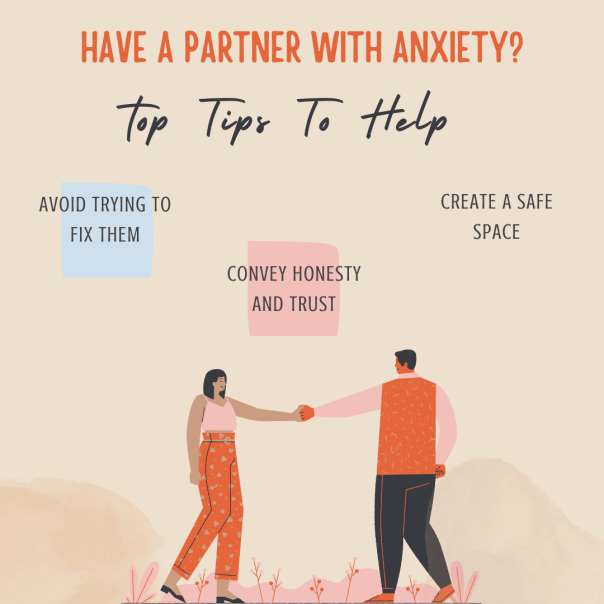
7 Tips To Help Support Your Partner With Anxiety


If you are married to, or have fallen in love with someone who suffers with anxiety, you may know how difficult life can be for them. Luckily, there are things that you can do to help to support them, making life more joyous for you both. Let’s dive right in.

Consider these ideas:

  1. Avoid trying to fix them. Acknowledge that you are their wife, husband, boyfriend, girlfriend, partner, or lover, and not their Therapist. While you can be there to help support them through any tough times, it’s important to avoid pressuring them into behaving how you believe they should behave.
    • When you put such additional pressure on them – even if you think that following your advice would help them – you may cause them to feel as though they have failed you, which will only exacerbate any anxiety they are feeling.
  1. Avoid telling them why they shouldn’t be afraid of something, no matter how tempting. Even if you think your partner fears are irrational, telling them what you think most likely will not help.
    • Instead, you can initiate a discussion around why this particular issue is upsetting. Sometimes talking can help reduce any fear being suffered.
  1. Be honest with your partner. Avoid treating them as a child who cannot cope with any sort of bad news. This can cause a challenging dynamic in your relationship.
    • Instead, be honest. For example, if you are going to be late getting home, let them know so they won’t imagine you dead in a ditch. If you have a large bill to pay, keep them in the loop instead of trying to hide it.
    • Hiding the truth can lead your partner to picturing the worst possible scenario.
  1. Understand that their idea of happiness may be different than you own. Some people may find happiness in partying or dancing, while others enjoy traveling and showing off those Instagram pictures.
    • Someone with anxiety may find happiness in a day passing without suffering from a panic attack. These small victories can mean a lot.
  1. Make them feel safe. This is one of the most important tips. Someone who suffers from anxiety may feel unlovable. Reassure them that you are both on this journey together.
  1. Remember that you are allowed to live your life. Just because your partner has anxiety does not mean that you can’t have a life of your own. You are still allowed out to meet your friends, go to a party, have hobbies, or do something else just for you.
    • When you leave the house without your partner, reassure them you are going to be okay, you will be thinking of them, and you will soon be back home safe and sound.
    • Whether your partner has anxiety or not, practicing self-care is important! Self-care helps to keep you physically and mentally fit and can prevent feelings of resentment against your partner.
    • Remind yourself that you and your partner are more than just anxiety. Anxiety does not define either one of you.
  1. Ask their opinion. Your partner may already know some things that you can do to help them relieve anxious feelings. Listen to them! No one knows them better than they do, and what they have to say is important.

Putting these ideas into practice can help relieve anxious feelings and strengthen your relationship with your partner. A counselor, therapist, or support group can also help immensely with additional strategies and techniques, to alleviate anxiety and strengthen your bond as you go through this journey together.

What do you think of these tips? Which one will you implement?

To Your Success,
Juan
What You Need to Know About Health Anxiety


When you’re living through a pandemic, it’s natural to pay more attention to any symptoms that seem suspicious. However, if these concerns are interfering with the quality of your life, you may be experiencing health anxiety.

That’s the modern name for what used to be called hypochondria. It often starts in early adulthood and grows more serious as you age. You may be convinced that you have one or more major illnesses, even if lab tests and other evidence prove otherwise. Health anxiety varies in intensity. You may be able to put your mind at rest with some effort on your own, or you may need to seek professional care. Try this guide for understanding your options.

Medical Care for Health Anxiety:

  1. Consider counseling. Health anxiety is often connected to other disorders, including other forms of anxiety. You may benefit from cognitive behavior therapy or similar methods that can help you address your overall well being.
  2. Take medication. Talk therapy may be enough, or your doctor may prescribe drugs. That could include antidepressants and anxiolytics that reduce anxiety.
  3. Communicate clearly. If you tend to exaggerate your symptoms, it may be difficult for your doctor to assess your condition. Keeping a journal may help, or you could ask a spouse or partner you live with to share their observations.
  4. Explore family history. You may be more prone to health anxiety, if you or a family member had a serious illness while you were growing up. Let your doctor know if this could be a factor.
  5. Seek appropriate care. While many patients with health anxiety spend too much time at the doctor’s office, others go the other extreme. If you’re afraid of finding out you have an illness, keep in mind that early diagnosis can often give you the best possible outcome.

Self Care for Health Anxiety:

  1. Educate yourself. Maybe you perceive ordinary experiences as being more dangerous than they really are. Learning about common minor ailments could help you keep things in perspective, when you have a headache or an upset stomach.
  2. Limit online searches. On the other hand, maybe you’re overwhelmed from reading too many medical sites. Take a break and find other pastimes. Like you, I have Googled my symptoms when I felt unwell, and convinced myself it was time to get my affairs in order.
  3. Help others. Shifting the focus away from yourself is one of the most effective and constructive distractions. Volunteer at a food bank or animal shelter in your area. Start a community garden in your neighborhood. Find a cause you can get behind.
  4. Manage stress. Chronic tension can aggravate any condition, including anxiety. Try to think positive. Experiment with relaxation techniques to find what works for you. Listen to music, or book a massage.
  5. Be active. Do you avoid doing things you used to enjoy because you think you’re not strong enough? Encouraging yourself to stay engaged could lift your spirits and help you to be more realistic about your abilities.
  6. Sleep well. Anxiety interferes with sleep, and sleep deprivation leaves you feeling out of sorts. Make it a priority to stick to a consistent bedtime that gives you 7 to 8 hours of rest each night. Limit alcohol and caffeine, especially later in the evening.
  7. Breathe deeply. For fast relief, practice breathing exercises that can calm you down or give you energy.
  8. Build support. Let your family and friends know how they can help you. Talking with someone you trust may help you deal with emotional issues that could be contributing to your health anxiety.

If you think you or a loved one may be troubled by excessive and irrational health concerns, talk with your doctor. An effective treatment plan can help you to take care of your mental and physical wellbeing and enjoy life more.  The next three posts will offer ways and tips to help family members with anxiety. Look forward to having you.

To Your Success,
Juan