Surprising Facts About Anxiety


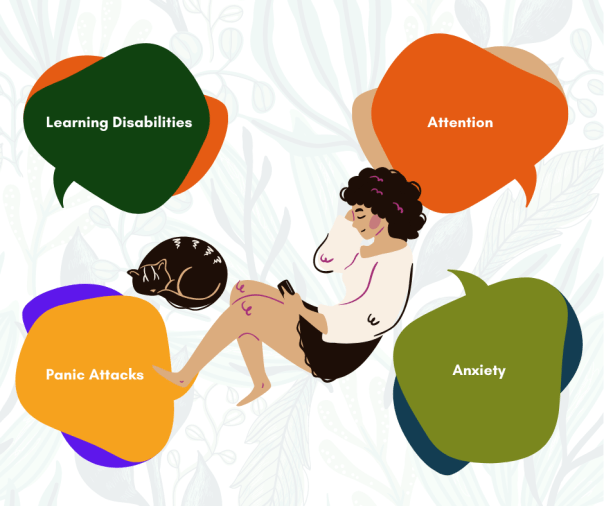
Did you know anxiety can affect your attention span? Researchers believe there is a brain connection between the two. Initial studies on teens, show they’re more likely to have both issues together. If you have anxiety or trouble concentrating, consider the following  discoveries:

  1. The link between anxiety and attention. Here is what researchers at the University of Texas discovered:  
  • Teens who have anxiety, are also more likely to perform worse in school, because of attention issues. They also saw a connection between anxiety, and other mental health issues like depression and suicide. 
  • Researchers shared that in some cases anxiety appeared first, while in others,  it was attention span. Recognizing the first issue, can help families deal with the second. 
  • Teens who had problems concentrating, were also more likely to have anxiety. Experts believe there is a deeper reason for this in the brain. 
  1. Unconscious anxiety. Medical experts believe unconscious anxiety, can explain some cases of attention deficit disorders. 
  • Unconscious anxiety occurs, when you don’t recognize you’re actually suffering from worry and concern. You have trouble concentrating, often blame it on your poor attention span. However, in reality, your unconscious anxiety is actually preventing you from being able to focus. The root of this anxiety can be buried among deeper emotional concerns.
  1. Overlapping symptoms. Anxiety and attention deficit hyperactivity disorder can overlap. Shared symptoms can include having trouble concentrating, focusing on one task, not having control over your impulses, being irritable, feeling scared and afraid to try new things. 
  • It’s not always easy to tell apart anxiety and attention disorders. 
  1. Treatment and help. If you or someone you care about has anxiety and attention issues, seeking help may bring real benefits.  
  • Treatment options can include medication to control anxiety, and help attention spans. Another option is therapy that helps adjust behavior. Meditation and relaxation, are also commonly used to help both disorders. 
  1. The role of learning disabilities. It’s important to avoid overlooking learning disabilities, that can exacerbate anxiety and attention issues.  Researchers have noticed all three issues can occur together.
  • In some cases, learning disabilities are not caught right away as a child starts school. Children are sometimes able to compensate, so the issues go undiagnosed.
  • Anxiety and attention disorders can be worse in children with learning disabilities. By focusing on the learning issues, they  have the chance to succeed in school and reduce their anxiety. A child with a learning disability can feel anxious before every test, and might try to avoid classes. In addition, the same child can be so stressed, they’re unable to concentrate on the simplest tasks. The learning disability makes these issues more difficult to treat. 
  • It’s important to note that kids aren’t the only ones who suffer from all three conditions. Adults can spend years being misdiagnosed, or not getting the proper treatments.  

Anxiety and attention issues can appear together. If you or a loved one suffers from these issues, current research can help you understand, what is happening in the brain and seek treatment. As a Social Work Contractor, I am in a unique position to to help clients with the daily challenges, some of which can be incredibly hard to move past.

Helpful resources:

Download this FREE page of an Anxiety Journal. It will help you to keep track of your moods. Print out as many pages as you need.
American Psychology Association offers help and insights on all things mental health.
Contact the National Alliance on Mental Health :1800 950 NAMI, if you need additional resources and support.

To Your Success,
Juan 
Anxiety and Fear are Cousins


Welcome Back,

Pleased to have you. Thanks for stopping by!

Do you feel anxious before a medical/dental visit, or starting something new? Full disclosure; I get very anxious years in the Dentist office. I crumble into a million little pieces. I am constantly amazed at how quickly it happens! I start sweating profusely. My bladder starts filling up again, doesn’t matter if I went minutes ago. My body is wound so tightly, I have to force myself to relax. Recently, the Dentist finally suggested I take Valium. My PCP agreed.

Have you gotten the jitters before speaking in front of a large group, or sweaty palms when thinking about the future? These are common reactions, when faced with something that’s scary or unfamiliar, and it doesn’t necessarily mean anything is wrong. However, some people suffer from a more severe form of anxiety, that causes more serious physical symptoms. To better understand if your anxious feelings could be a sign of an anxiety, or panic disorder, let’s do a deep dive:

1. If your heart is racing, and you can’t breathe correctly, this can be a symptom of anxiety that is severe, enough to get professional help.


2. Some people have uncontrollable fears of things like crowded places, driving, or germs that cause complete avoidance of places or situations.


3. The consistent inability to concentrate can be a symptom of anxiety. This must be consistent behavior, not just on those occasions when you lack sleep, brought on by hunger, for instance.


4. Nervous behaviors, such as walking around the same area, over and over again, or twitching your fingers or toes repetitively, can be another indicator.


5. A feeling of doom that something will happen to you, such as an accident, heart attack, or even death, can be symptoms of an anxiety disorder or panic disorder.


6. Numbness in your hands, fingers, toes, and legs or feeling like you can’t stand are  common.


7. If you have trouble swallowing, or unusual dry mouth episodes, these may be indications of anxiety.


8. Fear of people around you, and the desire to be alone, are feelings many anxiety sufferers face.


9. The inability to leave your home, can be a symptom of a severe anxiety or panic disorder.


10. If your normal activities become overwhelming, you could be suffering from anxiety or a panic disorder. More than fifteen years ago, I worked the front desk of an animal clinic. I didn’t know it at the time, but I had a panic attack, later confirmed by EMS personnel. One of the worse experiences of my life. My Doctor surmised, it was related to working and attending school full-time. 

Certain cultures rarely openly acknowledge mental health issues. More than ever, I hope to reach this demographic. Being born and raised in the Caribbean, I can attest to this.  The good news, is that these symptoms and conditions, are no longer considered taboo in mainstream society. The COVID pandemic, has shed a huge light on the burgeoning mental health crisis.

If you suffer from anxiety, please do not do so in silence. Many mental health clinics, and hospitals offer affordable support, if you’re on a lower or fixed income. Your health insurance can help you get treatment, they cannot reveal your diagnosis to your employer. Medications, meditation, and relaxation techniques are also beneficial. Understanding your condition, can help alleviate the stress and fear caused by panic attacks.  Living life in fear of another panic attack will hold you hostage.  Get the treatment that can put you back on the road to peace, health and happiness. You’ll be glad you did!

If you are experiencing a crisis, and need to speak with someone immediately, please contact the National Suicide and Crisis Hotline, at 1800 273 8255.

Here is a FREE Anxiety Self Test worksheet to help you sort things out.

Up next, surprising facts about anxiety.

To Your Success,
Juan


Pandemic Within a Pandemic


Readers,

February is here already. Yikes! Can we talk about mental health for a bit? Almost two years into the pandemic, we know someone who either contracted the disease, or died from it. Another troubling trend, is the urgent need for mental health support. Millions are now coping with increased anxiety, depression, panic attacks, PTSD, insomnia, stress eating, loneliness, paranoia..etc. I believe we are in the middle of a pandemic within a pandemic. Sadly, some saw no way out, and took their own lives. The past two years have been TOUGH. 

A few days ago here in NYC, media outlets broke news which quickly spread; Miss USA 2019, Chelsie Krist jumped to her death. She made history, part of a trio of black beauty pageant winners, who for the first time, held the titles of Ms USA, Teen USA, and America. Just about every comment echoed the same sentiments “ No one saw this coming. She looked like she had it all. A Lawyer who fought for reform, mental health advocate, and successful television personality, heartbreaking”.

The thing is, we need to stop judging others on appearances. That strong friend who never complains, constantly smiling, appears happy is most likely the one silently asking us to check in on them. My blog’s content calendar was planned before this tragic news broke. You can expect the next few months to be all things mental health. 

Most of my clients are anxious about the future. Best laid plans have been shattered. I have bouts of anxiety too. To help them, I’ve had to quickly shift and pivot. I cannot pour from an empty cup. What issue in your life has been amplified because of COVID? I can only imagine your list has gotten longer. We may not know each other personally, but I understand where we are. Over the next few months, when you visit this page, you can expect to find mental health related posts, hoping to be a source of light as we work our way through uncertainty. 

A bit about my background. I have spent the past 5+ years working with the homeless and formerly homeless, on the grimy streets of NYC. My clients struggle with persistent mental health disorders, some have a history of suicide attempts, drug addictions, in patient psychiatric hospitalizations, etc. The job is not easy. In 2011, I graduated from the University of Essex UK, with an MSc in Psychology. Barry University in Florida, provided the background with a BSc in the same field.

I am also a Reiki Master. I continue to  actively seek out other mental health related certifications. When I lived in Miami, I worked in the medical field for about six years. I won’t always get things right. The upcoming posts  are not meant to treat or diagnose from behind a computer screen, simply to share my knowledge, experience, and guidance.  Always follow the advice of your medical and mental health providers.

We will begin with anxiety. Hope to see you soon.

To Your Success,
Juan

Develop The Growth Habit Mindset


Readers,

Have you ever considered the flip-side of all that, by building a habit that’s positive? What if the habit you formed was one of growth and personal development? Having a growth mindset positively impacts your life. What are the benefits of developing a growth mindset? Why put yourself through so many cathartic changes? Below is my take:

1. You keep learning. Learning is important as you not only discover new ways to do things, but by making it a practice, you develop new ways of thinking, and ideas. Learning connects you with more of the world and helps you see things with a deeper significance than you ever thought possible. But more than that, people who stop learning, very quickly stagnate. Studies have shown that the practice of learning new things when you are older helps ward off problems related to dementia. In short, learning is good for your brain!

2. You learn perseverance. As we learn new things, we adapt and change how we think. That gives us the ability to see other solutions to problems, that would have frustrated us in the past. By challenging yourself to grow, you learn how to push through obstacles and forge new paths.

3. You embrace challenges. Growth can be challenging. But by pushing yourself, you’re able to look at challenges differently. An obstacle now becomes an opportunity to learn something new, and to do things in a way you haven’t before. 

4. You embrace failure. When you’re interested in growing as an individual, you start to see failure differently. Everything becomes a potential lesson in a way that you didn’t think would work. 

5. You become more open to criticism. By being willing to grow, you start to see that the input of other people has significance. You see their words not so much as something negative, but one you can use to develop as a person, and learn something about yourself. You might not always like the lesson, but that’s part of growing too.

By embracing personal growth, you find the best version of yourself. You have the opportunity to become more than you ever thought possible. And the best part? Finding out you can become more still, and that the furthest edges of yourself are far beyond what you thought you ever could be. 

$15,000 Less?!?!


The stats are staggering: 94% of people surveyed said procrastination affected their happiness. Studies also showed procrastinators earn $15k less than each year..wowsers. At least 20-25% of adults are affected. The full article is posted below. Be warned, get ready to be shaken up. I know I was.

We often struggle to finish projects, even when we have every intention of finishing them. Full disclosure, this was once my biggest flaw. There, I said it. At times, it has gotten so bad, I resorted to scheduling my entire day, hour by hour, to get anything done! Believe it or not, this is a common problem people face. After taking stock of myself, through trial and error, I discovered that luckily, there are ways to improve, which actually work. I have gotten a lot better! Everyone procrastinates sometimes, but if you find that procrastination is a constant problem for you, it’s time to make a few changes in your life. Below are several tactics you can use to help you kick the habit.

Divide Up The Task
Often, when you procrastinate, the task seems insurmountable, one which you don’t believe you will be able to finish. Put a stop to this thinking by breaking up the task into more manageable pieces. For example, if you were supposed to clean the basement, resolve to clean one of the four corners each day, instead of trying to tackle it all at once. This tactic helps to make tasks more manageable, leaving us feel less overwhelmed.

Make A Deadline
Now is not the time to tell yourself you will do something “later.” Instead, set a strict timeline for yourself, with sections of your goal having deadlines. This way, you known when you will be completing something. It may also help to have a small reward for yourself along the way. An example of this would be a student needing to write a four-page paper. And for each page the student completes, they would reward themselves with fifteen minutes of phone time.

Stop Your Common Distractions
Usually, when someone procrastinates, it’s for the same reasons each time. You planned to clean the kitchen, but got sidetracked with a trending TV show instead. Put a stop to this by eliminating common distractions. If the TV is a distraction for you, maybe it’s time to work in another room.

Make Small Goals and Reward Yourself
As you plan how you will conquer your task or project, break your goal into smaller mini-goals. Then, cross them off and reward yourself as you complete them. It will help keep you on task, and you’ll be able to feel as if you are making progress, even if it’s small.  This progress will do wonders to keep your spirits high. The little rewards you are giving yourself will do wonders.

Spend Time With Motivated People
There is nothing quite like hanging out with someone motivated to boost your motivation. Find a friend or colleague whose motivation you admire, and resolve to spend more time with them. Or get a buddy in on your plans, keep each other motivated regularly. Either way, it’s much easier to stop procrastinating, when you’ve got others around you accomplishing remarkable things!

Overall, discontinuing your procrastination habit can be extremely difficult, but it can be done just by changing some minor things in your life. Start by dividing up the task, making deadlines, and getting rid of your most common distractions. Then surround yourself with other positive people, and you will soon find yourself accomplishing more than ever before!

Procrastination Statistics: Interesting and Useful Statistics about Procrastination

To Your Success,
Juan


5 Tips for Keeping Self-Sabotage at Bay


Like most people, I want to be productive, but have struggled with self sabotage in the past. It is relatively easy to fall back into old habits. In fact, sometimes I wake up in the morning, with all kinds of enthusiasm for the projects I am determined to going to get done during the day.  Now fast forward a few hours, and suddenly I’m dragging myself home at nightfall wondering where the day went, feeling like I never accomplished anything at all. 

How to get past this? Simple! Here are some things that I have had success with:
Listen to Music
It’s hard to get yourself going if your mood is what’s dragging. Thankfully this is a quick fix. I generally put on some music I love, something fast-paced and catchy for a quick pick-me-up and watch your productivity soar. 
Get up and Move
Like listening to music, putting your body in motion will build your energy levels (so long as you’re not trying to run a marathon). Dance around the room, take a brisk walk or try a few jumping jacks to get the blood flowing. Then tackle your task again, wide-awake and energized.
Look Inward
Conversely, sometimes what I need is some quiet time. During the times I find my mind racing, and unable to concentrate on what I’m doing, meditation tends to slow things down. I find a quiet place, close my eyes, and focus on my breathing. Take deep breaths, nice and slow, and focus yourself on the present until you feel calm again.
Reassess What’s Important
It might be you’re not getting things done because you no longer find the value in your goal. If this seems to be the case, take some time to ask yourself some very crucial questions about why you’re on this journey. It might be you either need to shift your goal to something else entirely or, at the very least, adjust the outcome to serve your present needs.
Contribute
When all else fails, if you do not feel your work has value, offer to help someone else. Mentoring is one of those win-win situations where you bring your life skills and experience to help someone else in need. At the same time, you rediscover your passion through the act of teaching others what you know.

Do all this, and it’s good-bye self-sabotage, hello accomplishment. Soon you’ll be more productive than ever! Have you tried any of these suggestions, and if so which one worked, or didn’t? I’d love to hear your thoughts!

Double Your Productivity: Three Simple Steps


If time is one of the main reasons why you have not accomplished some of your New Year’s resolutions, help is here. With no time to waste (pun intended), let’s examine three ways in which 2022 can be different.

Learn to delegate. At work, consider delegating projects and tasks. Match the task with the person who can do it the best…provided you are comfortable in asking for help. You now have time  to focus on parts of the projects you excel at. Refrain from trying to control their actions. Be confident the team around you can do an exceptional job, even if their methods are different. Fostering a team spirit allows everyone be part of the success. The better you are, the less everyone feels the need to turn to you for everything. At home, delegating chores teaches children responsibility, enables them to feel like an integral part of the family, and enjoy the feelings of pride and confidence for a job well done. You now have more time to enjoy with family, and practice self care. Relax, exercise, pray, and meditate, all contribute to helping you relieves stress, and recharge energy. 

Affirmation: I will let go of the need to do and be everything. Taking time to rest fuels my creativity and stamina.

Self-Reflection Questions:
Do I ask others for help?
How can I delegate some of my current responsibilities?
Do I arrange my schedule so I have time for myself?

List Making. Our days quickly become full of tasks. Priorities are often incredibly fluid, forcing us to constantly reevaluate what we must—and can—accomplish before the end of the day. Creating lists aids our ability to focus on the current tasks, while maintaining an awareness of what needs to be accomplished next. Start the day by plotting work. Visualize which tasks need to be completed first, and estimate how long they may take to complete. Giving yourself extra time to complete assignments allows for a buffer, in case unexpected obstacles arise. If possible, attempt to plan for the unexpected. After a break or lunch, quickly revisit the list. Bear in mind the working list is always open to revision, because new tasks arise throughout the day. Priorities change, and  being adaptable is key as things change. Removing completed tasks and adding new work, enable us to see the progress we make during the day.

Affirmation: Today, I anticipate the unexpected. In order to be successful, I must be flexible. Therefore, I allow my list to change with time, fluid priorities, and the can-do attitude that I bring to each new task.

Self-Reflection Questions:
How much time should I spend creating a list of tasks and priorities?
When is the best time to evaluate (and reevaluate) my priorities for the day?
How does making a list help me outside of the workplace?

Organization. Throughout the day, we encounter situations that require us to take action to resolve them. The more efficient the action, the quicker we can tackle other tasks. Your organizational skills are paramount to living life the way you want. You can fill your days with accomplishments and still leave time for fun. Plan ahead, by preparing as much as possible the night before. Before beginning a job, gather the materials and tools needed to finish it. Know beforehand where everything you need is located.  Give everything a home. Declutter regularly. Avoid procrastination. If you encounter something that requires sorting or straightening, do it right away.

Affirmation: Today, I plan to take action to increase my organizational skills. I know I can streamline my home to provide easier access to tools, materials, and personal items I need to live a more organized life. I find that the more organized I am, the better life I live. 

Self-Reflection Questions:
In what situations do I show effective organizational skills?
Are there times that I wish I was more organized? When?
Starting today, what can I do to increase my organizational skills?

Oh look, January is almost over. Where has time gone? I know many of us have discarded our resolutions, because why bother? If you are plagued by self sabotage, keep putting things off, need a mental shift, to help you refocus, the posts I have planned for the rest of the month, will push you to do just that. 

To Your Success,
Juan

Discipline: The Bridge Between Your Goals and Accomplishment


Since the start of the year, I have blogged about making resolutions, forming new habits, and being open to change.  None of these changes can survive without a healthy dose of self discipline. If want to achieve more than you ever thought possible, the next few minutes of your time can be a game-changer. Contrary to what you might have been told in the past, self-discipline is not being harsh to yourself or living a restrictive lifestyle. Rather it is the ability to practice self-control of your actions, and your reactions, the power to stick to hard decisions, and follow them without flaking.

Characteristics includes the ability to postpone immediate enjoyment in favor of future rewards, resolve that pushes us towards working on our goals until we achieve them, strength to overcome addictions, laziness, and procrastination, and the ability not to give up regardless of setbacks and failures. 

No quality is more important in the attainment of long-term sustainable success. Whether you seek to enhance your relationships, work ethic, or health, nothing beats self-discipline as the principal trait. However, while it doesn’t always come naturally, the good news is that it can become a learned behavior. Provided you have created a SMART goal, which of the following proven techniques will you implement?

Remove temptation from your environment is a critical first step. Self-control as an attribute, is one instance in which the saying “out of sight, out of mind” rings so true. For instance, if you are looking to minimize distractions (such as social media) turn off your mobile notifications, and block all social media until a time of your choosing. Need to lose weight? Remove the unhealthy foods from your cabinets and pantry. Schedule time for physical activity, especially if time is one of your excuses.

There will never be a perfect time. Kick the habit of waiting for all things to align perfectly before embarking on any journey. Embrace simple things: changing your daily routine, breaking bad habits such as negative thinking, actively developing new ones, even if it does not feel right in your mind. Start now, tomorrow is not promised to anyone.

Reward yourself for achievements, no matter how small. Being self-disciplined does not mean you have to become miserable or adopt a cold-turkey, drill sergeant type of life. In fact, by being too rigid, you are opening yourself up to disappointment, failure, and the possibility of falling back into old habits. Instead, have days when you relax your regimen. 

Don’t beat yourself up for setbacks. At some point, you will fall into some old habits. Pick yourself up and recommit to the journey. You have to accept that there will be spectacular failures and fabulous successes. Don’t get too hung up in frustration, guilt, and anger, but rather acknowledge mistakes as an essential part of the learning process.

Ultimately, developing self-discipline will allow you to live more freely by making choices that are more positive and healthy. 

To Your Success,

Juan

Mind & Body


Did you make a resolution to improve your health, and you are  unsure which of your priorities is most important in the New Year? Do you have plenty of dreams for the future, but not many concrete plans? 

I have curated a list of 15 resolutions you can make right now, to improve your physical and mental well being during the next 12 months and beyond. Comment below if you found them helpful.

Simple Resolutions to Improve Your Physical Health

  1. Eat right. Focus on adopting healthy eating habits rather than resorting to crash diets. Learn to eat more slowly and reduce your portion sizes.  Eat a variety of foods with plenty of complex carbohydrates, fresh vegetables and fruits. Add in some lean proteins and healthy fats to complete your meals.
  2. Exercise daily or as your schedule permits. Aim for at least 30 minutes of moderate aerobic exercise every day. Round that out with training for strength and flexibility. Find a variety of activities that you enjoy, like brisk walks and biking. Get an exercise ball or treadmill that you can use at home on busy days or when the weather outside is unpleasant.
  3. Get adequate rest and sleep. Insufficient sleep can make you more vulnerable to weight gain and many illnesses. Different individuals need different amounts of sleep, but the conventional eight hours is a good rule for most people. If you constantly feel drowsy, try going to bed earlier.
  4. Take care of your bones. Almost half of all women over 50 will suffer an osteoporosis-related fracture. Men can be at risk too. Eat plenty of foods rich in calcium and vitamin D. Get some sunshine and lift weights or do other resistance training.
  5. Practice good posture. Strong abdominal muscles will protect your back from injury and help you look younger. Get used to pressing your navel towards your lower back and keeping your shoulders relaxed. Breathe from your abdomen rather than your chest.
  6. Quit smoking. You probably already know all the dangers of smoking, including lung cancer and premature aging. Many people make several attempts before quitting for good so be open to various cessation methods. Your doctor may be able to help you find the right plan for you.
  7. Drink alcohol in moderation. Some people may need to avoid alcohol all together. Others can stay safe within the general limits of one drink a day for women and two for men. Avoid alcohol before bed so you get good quality sleep.
  8.  See your doctor. Regular checkups enable early treatment to keep small health issues from growing worse. If you can’t afford health insurance, you may be able to get some free or inexpensive screenings at local pharmacies and health fairs.

Resolutions to Improve Your Mental Health

  1. Manage stress. Keeping stress under control lets you enjoy life more. Set aside time each day for meditation or listening to soothing music.
  2. Build healthy relationships. Develop a strong network of support. Communicate openly and with respect.
  3. Monitor your thoughts. Think positive. Divert your attention away from nonproductive worrying by brainstorming creative solutions to challenging situations.
  4. Practice positive self talk. Be a good friend to yourself. Remind yourself of your strengths and accomplishments.
  5. Be compassionate. Show compassion to yourself and others. Be aware of the suffering in the world and look for ways to alleviate it.
  6. Engage in lifelong learning. Keep your mind sharp by giving it constant challenges. Take adult education classes or listen to foreign language tapes.
  7. Consider counseling. It’s wise and courageous to ask for help when you need it. Professional counseling or spiritual practices may help you bounce back from unfortunate events like divorce or unemployment. They can be useful for smaller things, too, like if you’ve just had a rough week.

While many New Year’s resolutions get discarded faster than the dried out Christmas tree, there are ways to make them stick. Set specific goals that are meaningful and attainable for you. Improving your physical and mental health is a great gift for yourself and your whole family.

To Your Success,

Juan

Insanity.


…is doing the same thing over and over and expecting different results” Tony Robbins. So it’s a new year, you want to change old habits and develop good ones. It’s important you understand why change is not easy. Old and bad habits are comfortable, safe, and does not require too much effort. However, if you are hoping for some insight into how to form new habits, the next few minutes is guaranteed to prepare you for change.  Think you can form a new habit in a few weeks? I used to think so too. Wrong. If you’ve been doing the same thing for decades, the truth is a bit more complicated.

The myth about behavior becoming automatic in 21 days, started when journalists misinterpreted a popular self-help book on Psycho Cybernetics back in the 1960’s. After all, you can probably eat more vegetables starting today, but complex tasks like playing the violin will take more time to stick. On the other hand, the New Year is an ideal time to begin forming constructive habits, geared towards enhancing your overall happiness and wellbeing for the rest of the year

Here are some basic strategies for habit formation. Set yourself up right now. Remember, it is okay to ease you into your new routines: 

Plan ahead. Eliminate excuses by plotting out your course in advance. If you want to wake up earlier, go to bed on time.

Be consistent. Regularity reinforces itself. Soon, it will be easier hit the gym after work, even if it’s raining, or colleagues are heading out for beer and pizza.

Spot triggers. Kicking a habit requires you to notice what happens right before you bite your nails or buy another pair of shoes. Are you bored at work or arguing with your spouse?
Develop substitutions. Once you know your cues, you can choose a different response. Take a walk or invite a friend out for coffee.

Review your reasons. Go over the reasons why you want to adopt your new behavior. For instance, remind yourself about the benefits of drinking water instead of soda.

Personalize your goals. While contemplating your why’s, visualize your future self. Focus on what you have to gain instead of just pleasing others.

What if you’re tackling something as ambitious as managing diabetes or transforming your dead-end dating history? Here are a few advanced strategies to get things going: 

Practice compassion. You’re bound to slip up occasionally. Forgive yourself, and move forward.

Team up. Enlist a friend, exchange support and encouragement. Eat lunch with a colleague who is trying to lose weight too.

Write it down. Raise your awareness by keeping a journal about your campaign to stop swearing or start flossing. Note what happens on the days you stick to your program,compared to the days when you drift back into old patterns.

Remove temptations. Eliminate the triggers that distract you from your objectives. Clear the junk food out of your kitchen, or the cigarettes out of your car.

Design obstacles. Make it difficult to give in to your old tendencies. Leave your credit cards at home to prevent impulsive shopping sprees.

Go on vacation. Leave home for a while. If you can afford one, vacations are an ideal time to forge new habits,  you can make a fresh start in different surroundings. 

Make time to sit down to meditate each morning. instead of becoming caught up in searching for lost socks or checking your email.

Make daily exercise (and parallel parking:) so easy you won’t even have to think about them. Positive habits make advantageous choices automatic so you’ll stick with them. You’ll also have more energy to devote to other challenges.

I hope you found these suggestions helpful. Feel free to share this post with your network.

You Your Success,

Juan